Our own team had been through this cycle more than once: pick a LinkedIn content tool, train it on months of posts and results, then watch it shut down and take everything learned with it.
Each shutdown meant starting from zero on a new platform, retraining a new system on writing style and what had actually worked, with no way to carry any of that history forward.
The real problem was not finding a better tool. No tool treated a user's trained content history as worth protecting, so our engineers built one for internal use first.
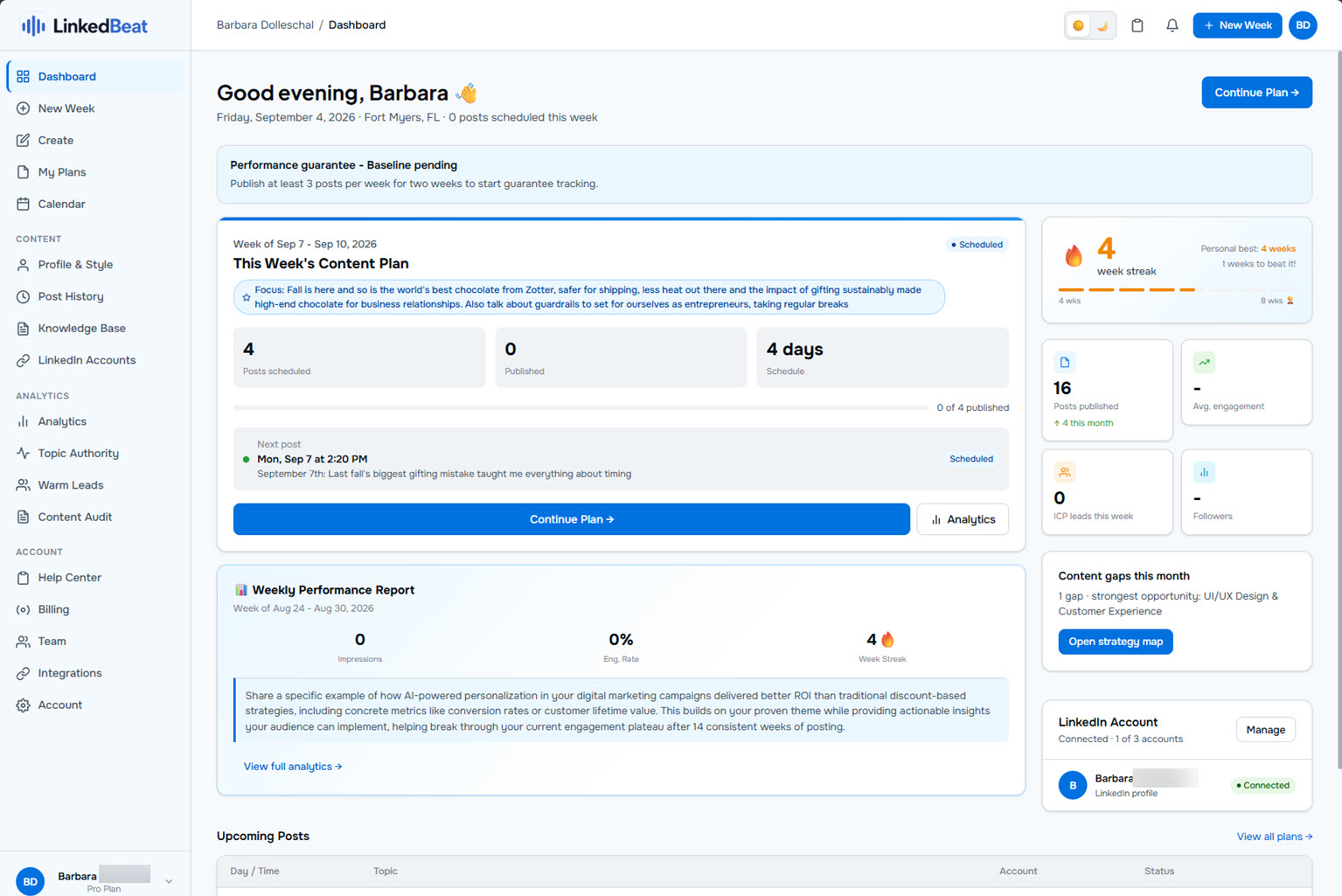
We built LinkedBeat first for our own team to plan and publish LinkedIn content without losing the work every time a vendor disappeared. Current-events research grounds every post in what is actually happening that week, not generic evergreen content.
Voice intelligence learns writing style from past posts and keeps it consistent post after post- the piece we most wanted to stop losing. Every post is scored against current LinkedIn algorithm signals before it goes live, and a one-click carousel generator turns any post into a document format that reaches further.
A warm lead tracker flags who engaged with a post and matches them against an ideal customer profile, turning content into pipeline instead of just impressions. A Monday morning performance report keeps the metrics, best-performing post, and posting streak in front of the team without anyone having to dig for it.
The internal version worked well enough, consistently enough, that we opened it up as a public SaaS product rather than keeping it in-house.
Nothing gets lost anymore. Your writing style, post history, and what has actually worked stay in one place, no matter what happens to other vendors in the category.
What started as an internal fix is now a public product with a stated guarantee: eight weeks of consistent posting, at least 20 percent higher engagement, or a refund for the last month.
The technical stack behind LinkedBeat is confidential.